bestgames2k20@gmail.com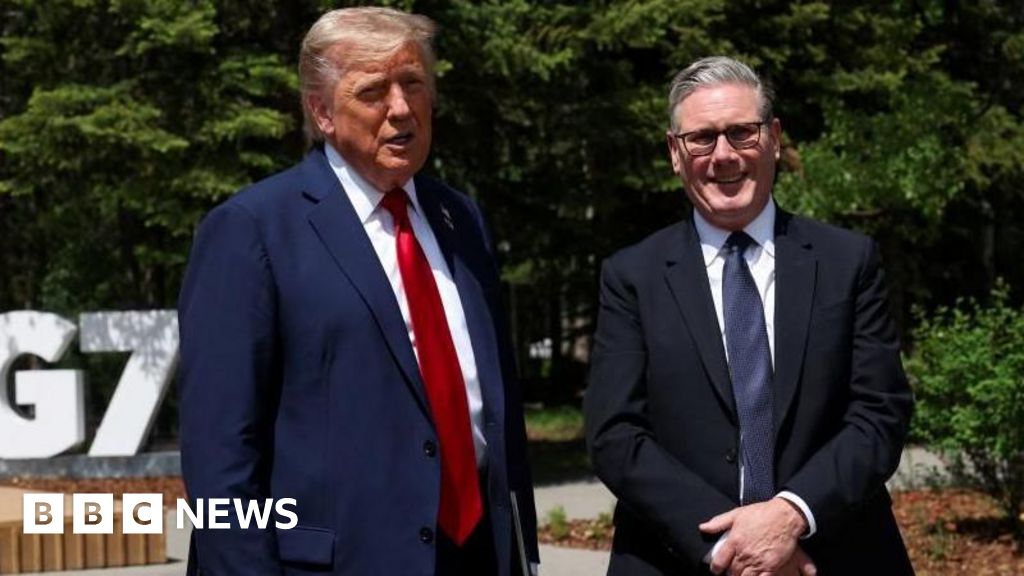
Correspondent

 Medialess
Sir Keir Starmer has been violating a delicate diplomatic coercion throughout the week on the Iranian issue.
Last night’s air strikes by SH.BA It means that the challenges facing the prime minister can now continue for months.
Sir keir repeated makes calls for de-escalation They have not been clearly cared for by the White House.
However, he has avoided direct involvement in the United Kingdom in military actions and has sought to maintain what British diplomats claim is a solid and valuable relationship with US President Donald Trump.
The response from the ministers seems not to be the tool they wanted, but they supported the result.
The United Kingdom has not clearly adopted the method, but the result – a delay in Iran taking nuclear weapons – is, they argue, in the national interest of the United Kingdom.
Sir Keir’s position has been moved since Tuesday, when he seemed sure that Trump would not intervene after sitting next to him at a G7 dinner in Canada.
“I was sitting immediately with President Trump, so I have no doubt, in my mind, the level of the deal had,” he said.
Just four days later the president intervened. Did the prime minister read badly and read Trump? Or the President – whose unpredictability is essential for his foreign policy approach – just to change mind?
No 10 has told us that the advanced warning of the US action was given, but the United Kingdom was not asked to participate. We don’t know why.
There was speculation that the US Bombers Stealth B-2 could have used the UK air base Garcia in the Indian Ocean as a road to Iran.
Instead, the “Midnight Hammer Operation” included B-2 flying without stops for 18 hours from Missouri to achieve their goals, according to Pentagon.
It is possible that the United Kingdom was not asked for help because it would have been a difficult request to give.
There has been debates at the head of the government in recent days regarding the legality of any involvement in the United Kingdom, with the Attorney General, Lord Hermer, giving advice on a series of scenarios.
With the next steps in unclear conflict, the US may end up seeking military support from the UK in the coming weeks – causing further difficult decisions for the prime minister.
So what else?
US Secretary of Defense Pete Hegseth has responded to concerns that US attacks can promote the onset of a long conflict by insisting: “This is certainly not over.”
However, the actions of the Foreign Office, Commonwealth and Development (FCDO) and the Ministry of Defense (Mod) suggest that they are afraid of revenge from Iran.
That is why British diplomats have planned a flight early next week to help “the tangible British nationals and their addicts who want to leave Israel and the occupied Palestinian territories”.
Defense sources have told me measures to protect the British Armed Forces in the Middle East have been strengthened in the last few hours, with additional combat aircraft already in the region and in “high readiness”.
A UK diplomat told me the United Kingdom Relations remain strong, as shown by the long meeting of Foreign Secretary David Lammy with Secretary of State Marco Rubio and Middle Eastern Messenger Steve Witkoff on Friday.
Another high source of government said: “We know how to support (our allies) without violating the legal ground.”
However, we do not know if – either like – Iran can respond, or whether the United Kingdom or its Army may be intended. The high -wire -wire act has simply become even more dangerous.