bestgames2k20@gmail.com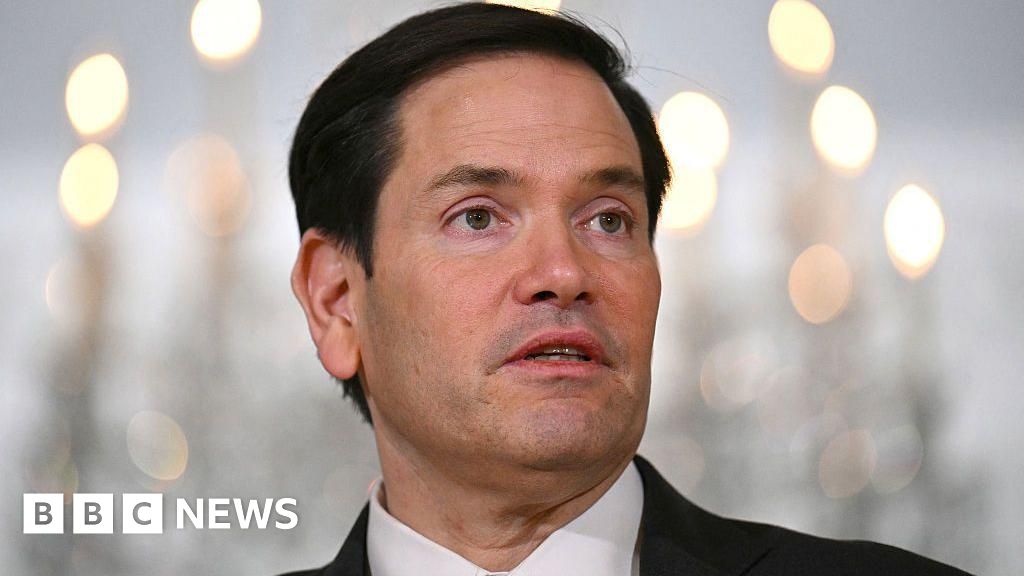
US Secretary of State Marco Rubio has called on China to prevent Iran from closing the Hormuz Strait, one of the most important transport routes in the world.
His comments came after Iran’s state press TV reported that parliament had approved a plan to close the strait, but added that the final decision stands in the Supreme National Security Council.
Any interruption in oil supply would have in -depth consequences for the economy. In particular, China is the world’s largest buyer in Iranian oil and has a close relationship with Tehran.
Petroleum prices increased after the US attack on Iranian nuclear countries, at the price of the raw standard standing that reached its highest level in five months.
“I encourage the Chinese government in Beijing to call them (Iran) for this because they depend a lot on the hormuz’s straits for their oil,” Marco Rubio said in an interview with Fox News on Sunday.
“If they (close the straits) … it will be economic suicide for them. And we keep options to deal with this, but other countries should also look at it. It would hurt the economies of other countries much worse than ours.”
About 20% of the world’s oil passes through the Hormuz Strait, with leading oil and gas producers in the Middle East using the water route to transport energy from the region.
Attempt every attempt to disrupt the strait operations could send to increased global oil prices.
They have been dropped to their highest level since January, with the pricing of Brent’s gross price reaching $ 78.89 a barrel from 23:22 GMT Sunday.
“The US is now positioned with an overwhelming stance of defense in the region to prepare for any attack against Iran.
The cost of raw oil affects everything, as it costs to fill your car in the price of food in the supermarket.
In particular, China buys more oil from Iran than any other nation – with its oil imports from Iran exceeding 1.8 million barrels last month, according to data from the Vortexa ship tracking firm.
Other major Asian economies including India, Japan and South Korea also rely heavily on raw oil passing through the strait.
Energy analyst Vandana Hari said Iran has “little to win and a lot to lose” from the closure of the strait.
“Iran risks returning his neighbors produced by oil and gas in the bay and calling out the anger of his main market by China by breaking traffic in the strait,” Hari told BBC News.
SH.BA joined the conflict between Iran and Israel over the weekend, with President Donald Trump saying that Washington had “destroyed” the main nuclear places of Tehran.
However, it is not clear how much damage was caused by the strikes, with the UN nuclear guards, saying it was unable to evaluate the damage to the fortified Foredo Underground nucleus. Iran has said there is only minor damage to Fordo.
Trump also warned Iran that they would face future “much worse” attacks if they did not abandon their nuclear program.
On Monday, Beijing said US attacks had damaged Washington’s credibility and demanded an immediate ceasefire.
China’s Ambassador Fu Cong said that all parties should curb “force impulse … and add fuel to the fire”, according to a state -run CCTV report.
In an editorial, the state -owned Global Times state newspaper also said that US involvement in Iran had further complicated and destabilized the Middle East situation “and that it was pushing the conflict into an” uncontrollable state “.